As Ghana’s economy continues to expand, so does its demand for reliable, affordable, and environmentally responsible energy. Across industry, transportation, and commerce, the pressure to move away from high emission and costly traditional fuels has never been greater. In this evolving energy landscape, Compressed Natural Gas (CNG) is emerging as a transformative solution one that aligns economic growth with sustainability.
Compressed Natural Gas (CNG)?
Compressed Natural Gas is natural gas that has been compressed to reduce its volume, making it easier to store, transport, and use as a fuel. Unlike diesel and petrol, CNG burns cleaner, produces significantly lower carbon emissions, and delivers improved cost efficiency for end users. It is widely adopted globally as a transition fuel, supporting energy security while enabling a gradual shift toward cleaner energy systems.
For countries like Ghana, CNG presents a practical and scalable pathway to modernising energy infrastructure without compromising industrial productivity.
Why CNG Matters for Ghana
Ghana’s industrial and transportation sectors are critical drivers of national development, yet they remain heavily reliant on imported liquid fuels. This dependency exposes the economy to price volatility, foreign exchange pressures, and environmental challenges.
CNG offers a compelling alternative by:
- Reducing fuel costs for industries and fleet operators
- Lowering greenhouse gas and particulate emissions
- Improving energy reliability and supply resilience
- Supporting national climate and sustainability objectives
By integrating CNG into its energy mix, Ghana can enhance industrial competitiveness while advancing cleaner energy adoption.
The Role of Infrastructure in Driving CNG Adoption
The success of CNG as an energy solution depends on robust, safe, and scalable infrastructure. This includes gas supply systems, compression facilities, distribution networks, and strict adherence to international safety standards.
Developing such infrastructure requires technical expertise, regulatory collaboration, and long-term investment elements that are essential to building confidence among industries and consumers alike.
Tetracore Gas Ghana Limited: Advancing Ghana’s CNG Ecosystem
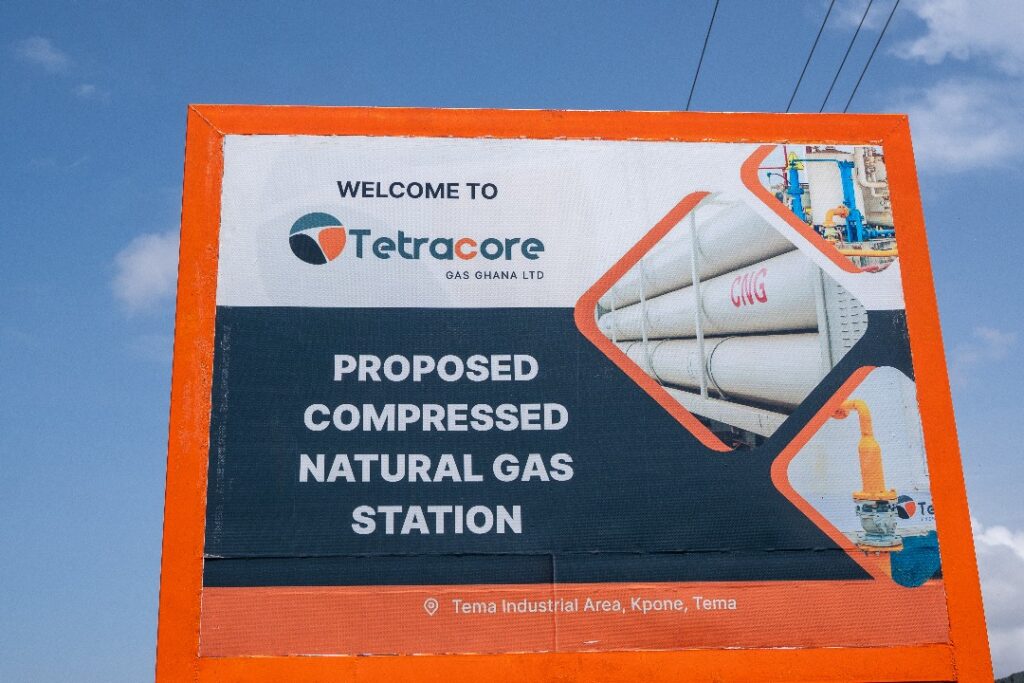
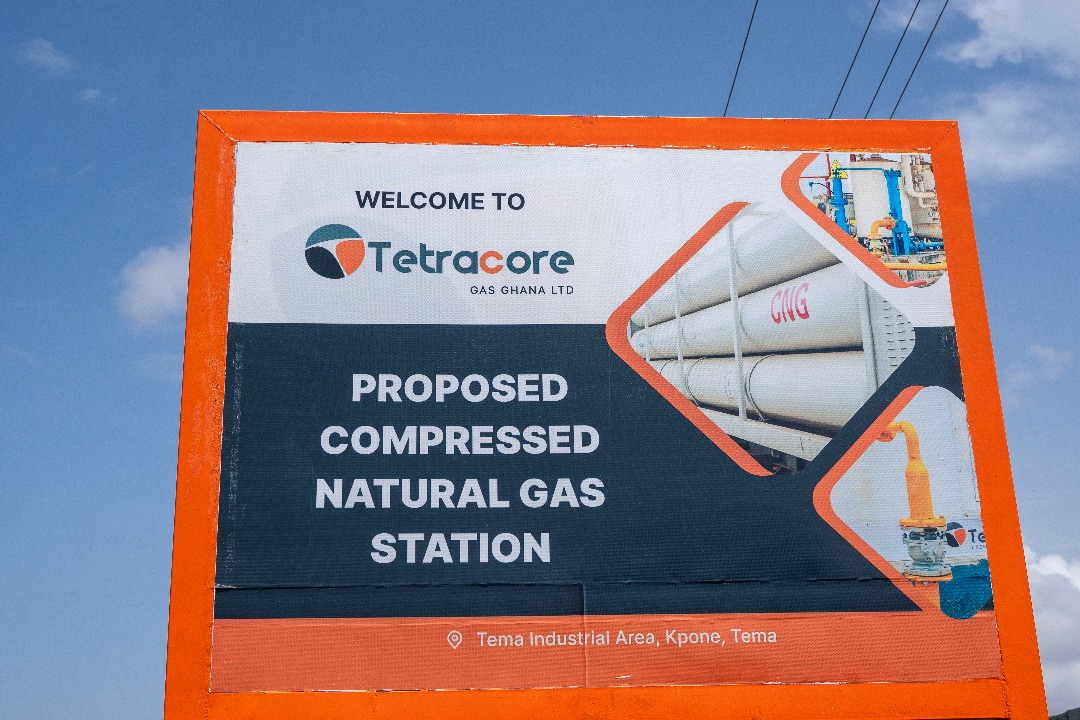
Tetracore Gas Ghana Limited, a subsidiary of Tetracore Energy Group, is at the forefront of Ghana’s CNG development journey. Backed by the Group’s extensive experience across the African energy value chain, the company is committed to delivering modern gas infrastructure that meets global standards while addressing local energy needs,by setting up the first CNG facility in Tema,Ghana , with a capacity of 5.1MMSCFD .
Through strategic investments, technical partnerships, and close collaboration with regulators and stakeholders, Tetracore Gas Ghana Limited is enabling access to cleaner, more efficient energy solutions for Ghana’s industrial and transportation sectors.
The company’s approach priorities:
- Safety and operational excellence
- Scalable infrastructure development
- Local content participation and skills transfer
- Long-term economic and environmental value
As a subsidiary of Tetracore Energy Group, Tetracore Gas Ghana Limited benefits from regional expertise and a shared vision of accelerating Africa’s transition to cleaner energy.
Looking Ahead: The Future of CNG in Ghana
As Ghana continues to pursue energy diversification and sustainability, CNG is poised to play an increasingly important role. With the right infrastructure, policy support, and private sector leadership, CNG can become a cornerstone of the nation’s clean energy transition.
Tetracore Gas Ghana Limited remains committed to supporting this future delivering reliable gas solutions that empower industries, reduce emissions, and contribute meaningfully to Ghana’s long term development goals.